Every great security program begins with structure — and that structure often comes from compliance.
In today’s interconnected world, organizations navigate a growing maze of standards and regulations: ISO 27001, NIST Cybersecurity Framework (CSF), PCI-DSS, HIPAA, GDPR, Qatar CSF, and Australia’s ASD Information Security Manual (ISM) and Essential Eight Maturity Model. These frameworks are no longer just checklists for auditors — they have become the foundation upon which enterprises build governance, accountability, and trust.
Executives proudly display compliance certificates in boardrooms; auditors produce detailed reports filled with evidence of due diligence; and customers, partners, and regulators gain reassurance that the organization operates responsibly. Compliance has become a currency of trust in a world where breaches dominate headlines.
But the real question remains — why does compliance matter so much?
The Backbone of Order in a Chaotic Landscape
Imagine a bustling city without traffic laws. Each driver decides what speed feels safe, which side of the road to drive on, and when to stop. It wouldn’t take long for chaos to unfold.
Cybersecurity, without compliance, is much the same. Every department might interpret security differently — some encrypt data, others don’t; some enforce access control, others leave it to chance. Compliance introduces structure, consistency, and discipline into this chaos. It tells every part of the organization what “safe driving” looks like.
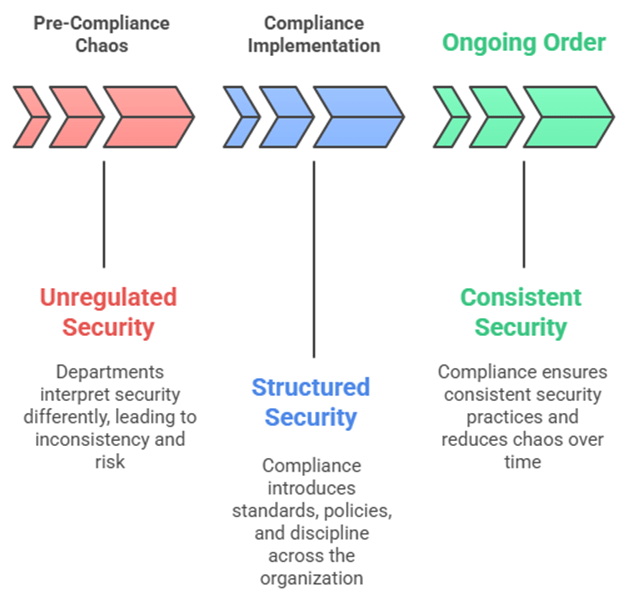
Figure 1.1: Role of Compliance
The Real Value of Compliance
- Structure and Order: Frameworks provide a disciplined method for building policies, processes, and technical controls. They compel organizations to define governance, accountability, and oversight, ensuring that security decisions are consistent and measurable.
- Legal and Regulatory Shield: Non-compliance isn’t just a technical gap — it’s a financial and reputational risk. GDPR fines alone have crossed €4 billion globally, while Australia’s Privacy Act amendments and Qatar’s regulatory mandates hold organizations legally accountable for data protection. Compliance acts as a protective shield against such penalties and liabilities.
- Business Trust and Market Confidence: In an era where reputation is fragile, compliance serves as an external validation of credibility. ISO 27001, PCI-DSS, and ASD ISM certifications often tip the balance in competitive bids or partnership discussions — they are proof points that the organization values integrity and operational resilience.
- Baseline for Security Maturity: Compliance ensures that core fundamentals — from access controls and encryption to incident response and business continuity — are consistently applied. This forms the foundation for building higher maturity, enabling organizations to evolve from reactive to proactive security postures.

Fig 1.2: Benefits of Compliance Frameworks
Real-World Use Case
Consider a global pharmaceutical enterprise that pursued ISO 27001 certification across its R&D and production facilities. What began as a compliance requirement soon evolved into a transformation journey.
By embedding ISMS practices into its culture, linking risk assessments to project funding, and automating access reviews, the company achieved measurable impact:
- 60% reduction in audit findings through continuous control validation.
- 35% increase in international collaborations, as partners viewed certification as a mark of trust.
- Faster regulatory approvals, thanks to unified documentation and transparent security governance.
Similarly, when Visa and Mastercard enforced PCI-DSS across their merchant ecosystem, payment fraud dropped significantly. Encryption, access control, and monitoring became standard practice, and what started as a regulatory requirement ultimately raised the global bar for digital trust.
These examples show that when applied meaningfully, compliance doesn’t just check boxes — it creates confidence, maturity, and measurable resilience.
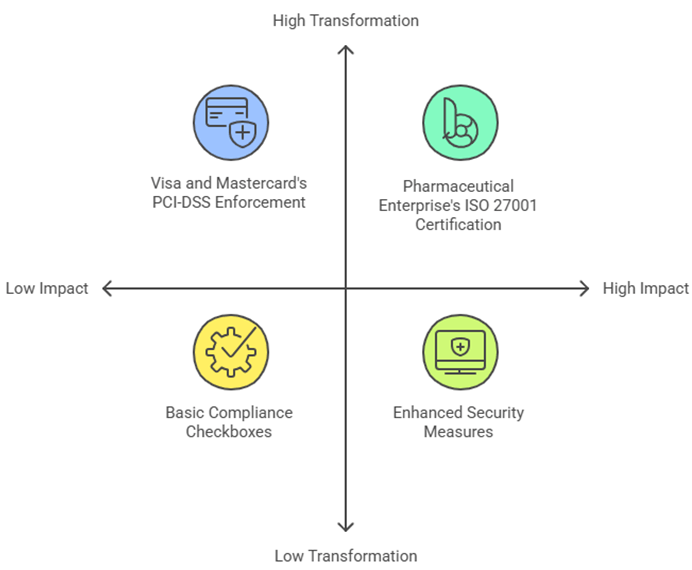
Fig 1.3: Impact of Compliance on Organizational Transformation
Conclusion — The Foundation, Not the Fortress
Compliance matters because it introduces order, enforces accountability, and builds credibility in a world of growing uncertainty. It transforms security from a fragmented effort into a disciplined, measurable framework.
But here’s the critical truth: compliance is the foundation, not the fortress. It defines the floor of security — not its ceiling.
In the next post, we’ll explore the uncomfortable reality that many organizations face: being fully compliant yet dangerously exposed. We’ll unpack why compliance, while necessary, does not always equal security — and how that false sense of safety can become a threat in itself.
 wirecat
Leave a comment